Program fit was difficult to judge
Prospective mentors could understand the broad purpose but still had to search for eligibility, responsibilities, time commitment, and compensation.
Northwestern University · UX Research · 2024
I researched how prospective mentors, parents, district employees, and program staff moved through two connected educational programs. The work exposed where unclear eligibility, inconsistent opportunity listings, and invisible backend decisions caused users to lose confidence.
The visible usability problems were being created by a larger service system. Information existed, but users could not always tell what applied to them, what was still active, or what happened after an application entered staff review.
STEAMbassadors connects mentors with STEAM learning opportunities, while eLEAP supports application and scholarship workflows. Both programs depended on people making informed decisions before moving into processes that were partly invisible from the user side.
Prospective mentors could understand the broad purpose but still had to search for eligibility, responsibilities, time commitment, and compensation.
Open gigs, closed gigs, and general program information were not separated strongly enough for users to know what they could act on.
Applications and nominations entered staff-controlled workflows without consistently communicating confirmation, review status, timing, or next steps.
The work crossed more than one website and more than one user type. I mapped the experience as a connected service rather than treating each page as an isolated usability problem.
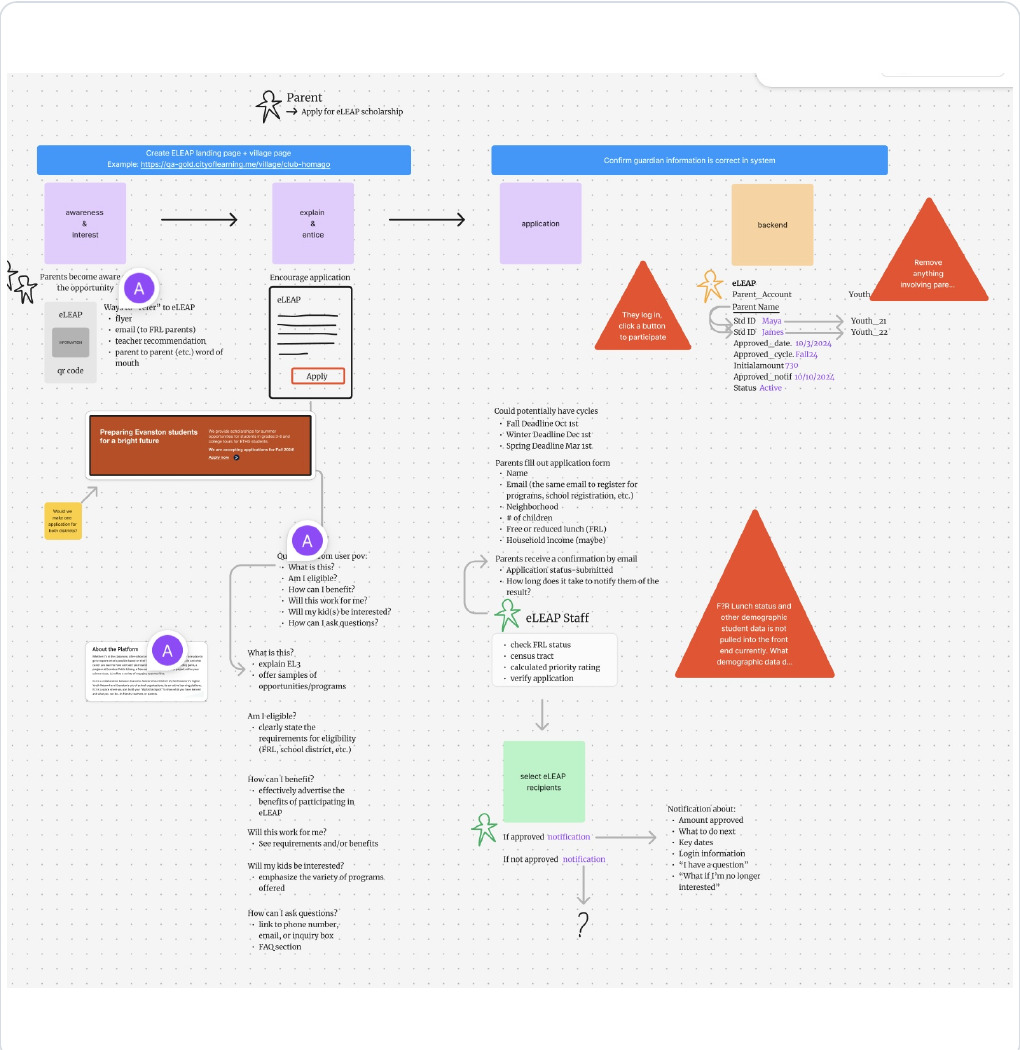
Understands the program, checks fit, and begins an application.
Presents requirements, collects information, and signals progress.
Verify eligibility, review records, coordinate funding, and communicate outcomes.
Receives a decision, next steps, or reimbursement information.
My central research question became: where does the experience depend on knowledge that only staff or the backend system can see?
I focused less on whether participants liked the interface and more on whether the system gave them enough information to make a decision and predict what would happen next.
The findings were translated into product requirements rather than left as general usability feedback. Each recommendation addressed a specific moment where the system made users interpret too much.
Users recognized the mentorship and STEAM focus but still searched for what they would do, what was required, and what the commitment involved.
People had to invest attention before knowing whether the opportunity fit their situation.
Move eligibility, responsibilities, benefits, location, hours, and application expectations higher in the page hierarchy.
Closed gigs appeared close to current listings, and opportunity pages did not always organize information in the same way.
Users could spend time evaluating an unavailable role or struggle to compare two active opportunities.
Separate active and archived gigs, add explicit status labels, introduce relevant filters, and standardize listing content.
After submission, responsibility moved to staff and administrators without always giving the applicant confirmation, timing, or a visible next step.
A completed form could still feel unfinished because the user could not tell whether the system had accepted it or what would happen next.
Define confirmation, review, approval, rejection, cancellation, and reimbursement messages around the actual backend workflow.
Mapping the parent journey exposed the gap between submitting an application and receiving an outcome. The interface could collect information, but staff still needed to verify eligibility, review records, and determine how the result would be communicated.
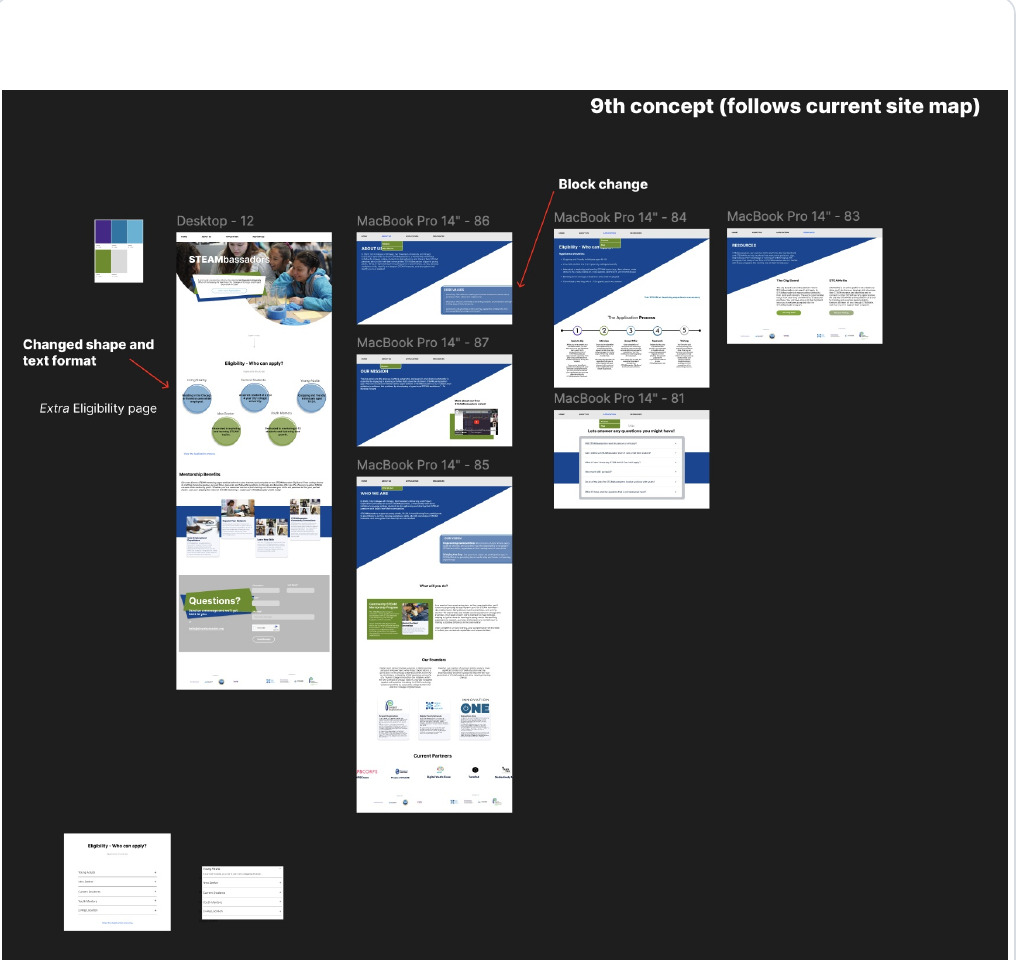
The redesign retained the program's identity but reorganized the experience around the questions participants needed answered first. Eligibility, mission, role expectations, FAQs, resources, and application steps became distinct destinations instead of competing within a long informational page.
Cancellation was not a single action with a single outcome. Responsibility changed according to the organization deadline and whether eLEAP funds had already been disbursed. Mapping that rule clarified what a future confirmation screen or status message would need to explain.
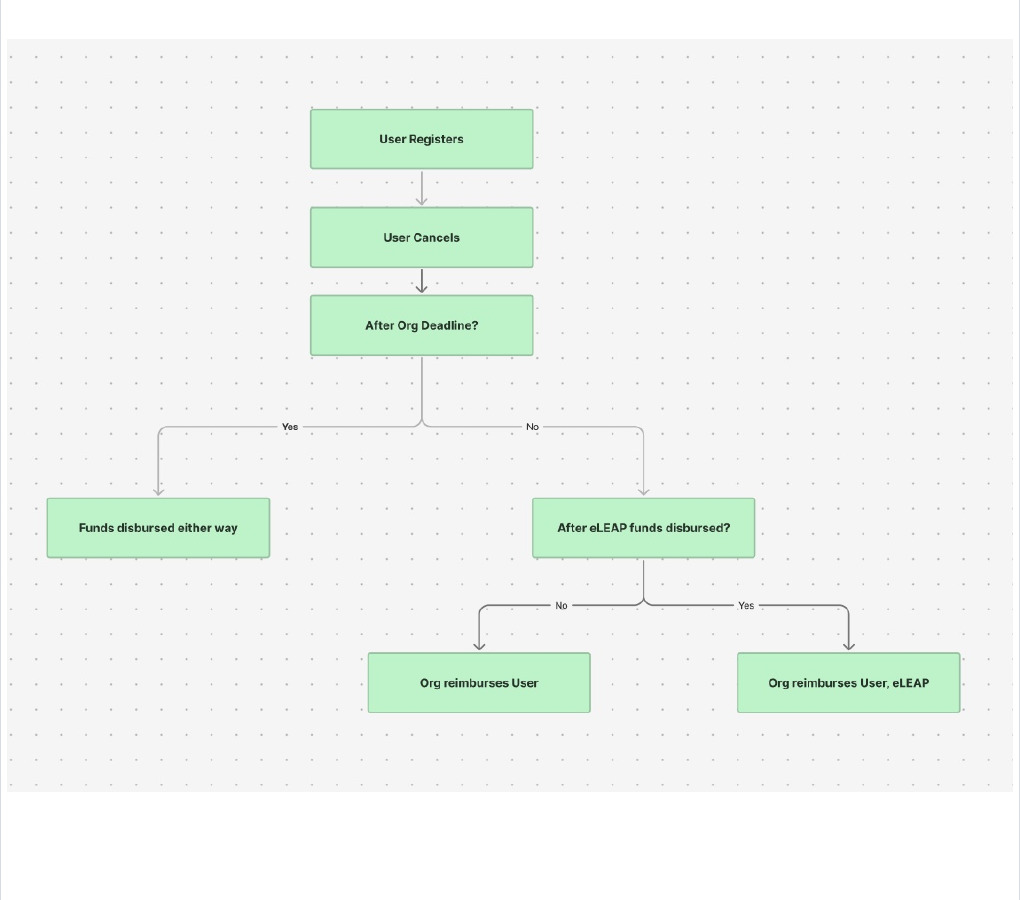
The system must know whether the request falls before or after the organization's deadline.
The response changes depending on whether program funds have already moved.
The user needs to know who is handling the reimbursement and when to expect follow-up.
The D65 journey began with an employee nominating someone else rather than applying for themselves. That introduced a three-sided handoff between the employee, an administrator, and the family receiving the opportunity.
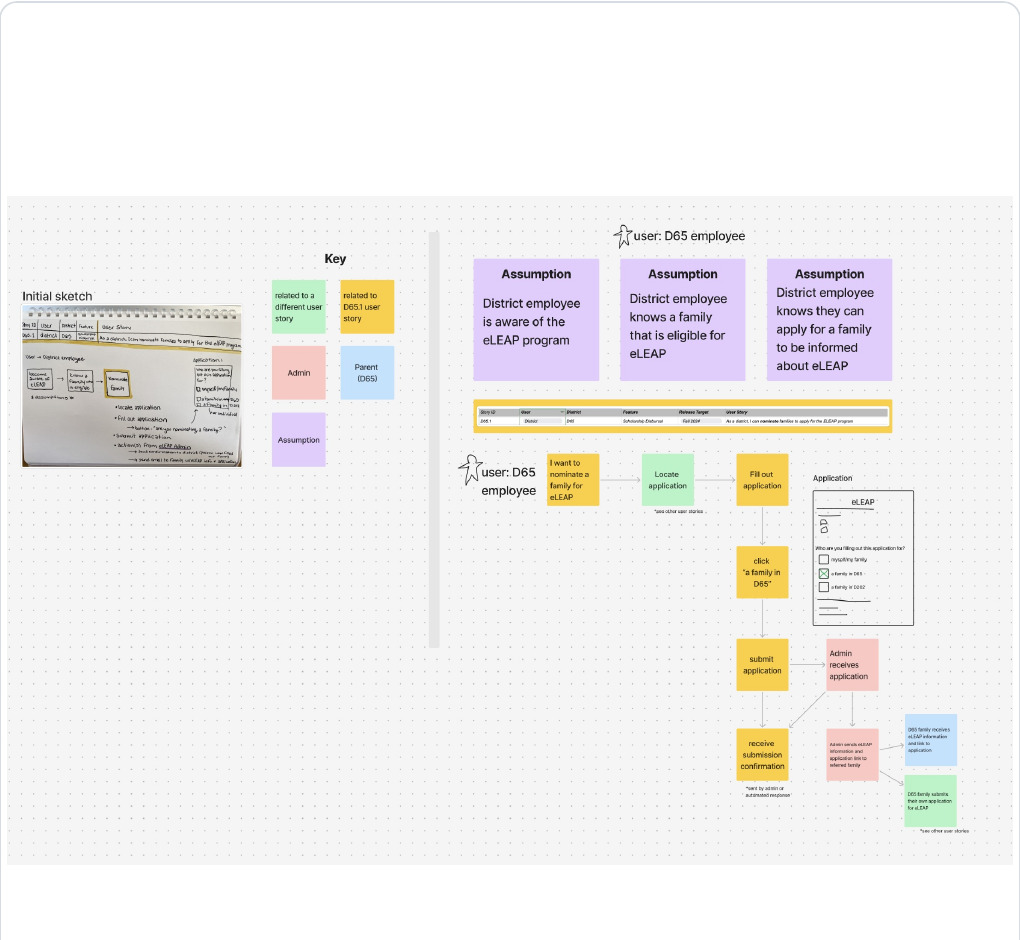
This artifact contains assumptions as well as mapped steps. It was used to identify what still required validation, not to present every part of the nomination journey as established fact.
The project converted recurring moments of uncertainty into a documented model of the service and a set of interface requirements. The resulting work connected research findings to a revised site structure, clearer opportunity organization, and more explicit application states.
Parent application, website structure, cancellation logic, and district nomination.
Eligibility, listing consistency, opportunity status, confirmation, and follow-up communication.
A clearer information architecture and clickable website concept grounded in the research.
The work established research-backed requirements and a redesign direction. It does not claim measured changes in application completion, staff workload, or program participation because those outcomes were not evaluated after implementation.
I entered the project expecting most of the usability issues to live within page structure and content. Mapping the application and nomination journeys showed that several of the most important breakdowns occurred after users left the visible interface, when information entered staff review or funding decisions changed behind the scenes.
The project taught me to treat missing feedback as a system problem, not simply a content problem. In future research, I would map user-facing and staff-facing states together earlier so operational rules can become explicit interface requirements before visual design begins.